The Mystery of the Destination Fee
![[HERO] The Mystery of the Destination Fee: What's That Charge on Your Window Sticker?](https://cdn.marblism.com/uzFMB2v6q6L.webp)
You're at the dealership, checking out that shiny new truck or SUV you've been dreaming about. You look at the window sticker (you know, that big label stuck right there on the glass), and you start adding up the numbers. Then you see it: a line item called "Destination Fee" or "Destination Charge" tacked on for somewhere between $1,000 and $2,300.
Wait, what? What is that? And why does it cost so much?
If you've ever scratched your head at this mysterious charge, you're definitely not alone. Folks around Muscle Shoals ask us about this all the time. So let's break it down in plain English and even dig into a little history while we're at it.
What Exactly Is a Destination Fee?
Simply put, a destination fee is the cost of getting your new vehicle from wherever it was built to the dealership where you're buying it. Cars and trucks don't just magically appear on our lot: they have to be shipped from factories that might be hundreds or even thousands of miles away.
Think about it this way: that new Ford F-150 you're eyeing might have been assembled at the Dearborn Truck Plant up in Michigan. Getting it down here to Alabama takes trucks, trains, and a whole lot of logistics. The destination fee covers all of that transportation.

Here's the thing that surprises a lot of people: everyone pays the same destination fee for the same model, no matter where they live. Even if you happened to live right next door to the factory, you'd still pay the standard fee. Manufacturers use what's called an "equalized delivery" system, which means the cost is spread evenly across all buyers nationwide.
The History Behind the Window Sticker
To understand how destination fees became a thing, we need to take a quick trip back in time to the 1950s.
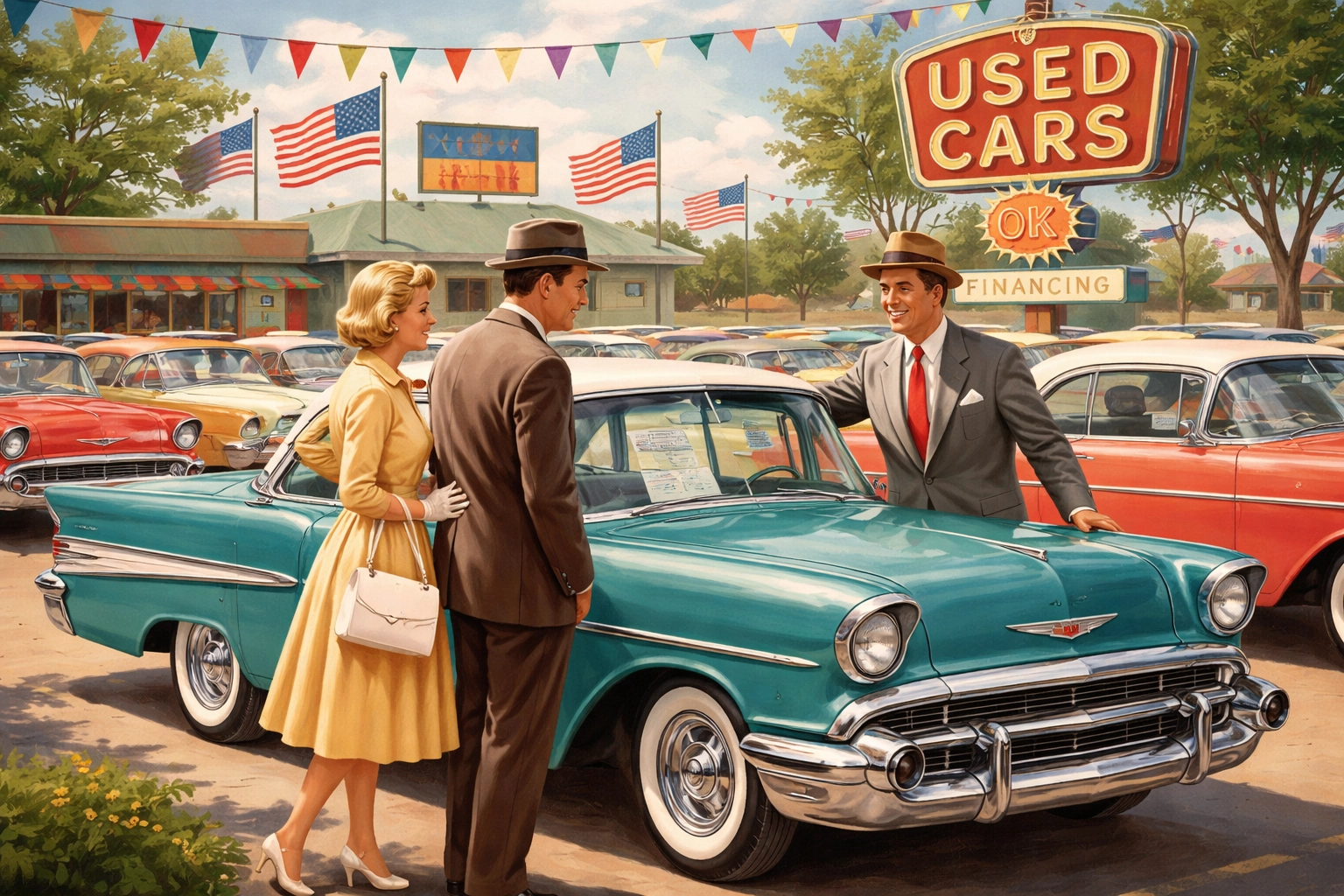
Back then, car buying was kind of like the Wild West. Dealers could charge whatever they wanted, and there was no standard way for customers to know if they were getting a fair deal. Prices varied wildly from one dealership to the next, and hidden fees were everywhere.
Enter Senator Mike Monroney from Oklahoma. He got tired of hearing complaints from consumers who felt like they were getting ripped off, so he pushed for a new law. In 1958, the Automobile Information Disclosure Act was passed, and it required all new cars to display a standardized label showing the manufacturer's suggested retail price (MSRP) and any additional charges.
That label became known as the "Monroney label" or simply the "window sticker." And guess what had to be clearly listed on there? That's right: the destination charge.
The whole point was transparency. Senator Monroney wanted regular folks to be able to walk onto a car lot and know exactly what they were paying for. No surprises, no hidden costs buried in the fine print.
How Much Do Destination Fees Actually Cost?
Destination fees can vary quite a bit depending on the vehicle. Here's a general idea of what you might see:
- Compact cars and sedans: Usually on the lower end, around $1,000 to $1,200
- Trucks and SUVs: Typically between $1,500 and $1,900
- Larger vehicles: Can push up toward $2,000 to $2,300
- Luxury and exotic cars: Some go even higher: we're talking $2,700 or more for brands like Bentley
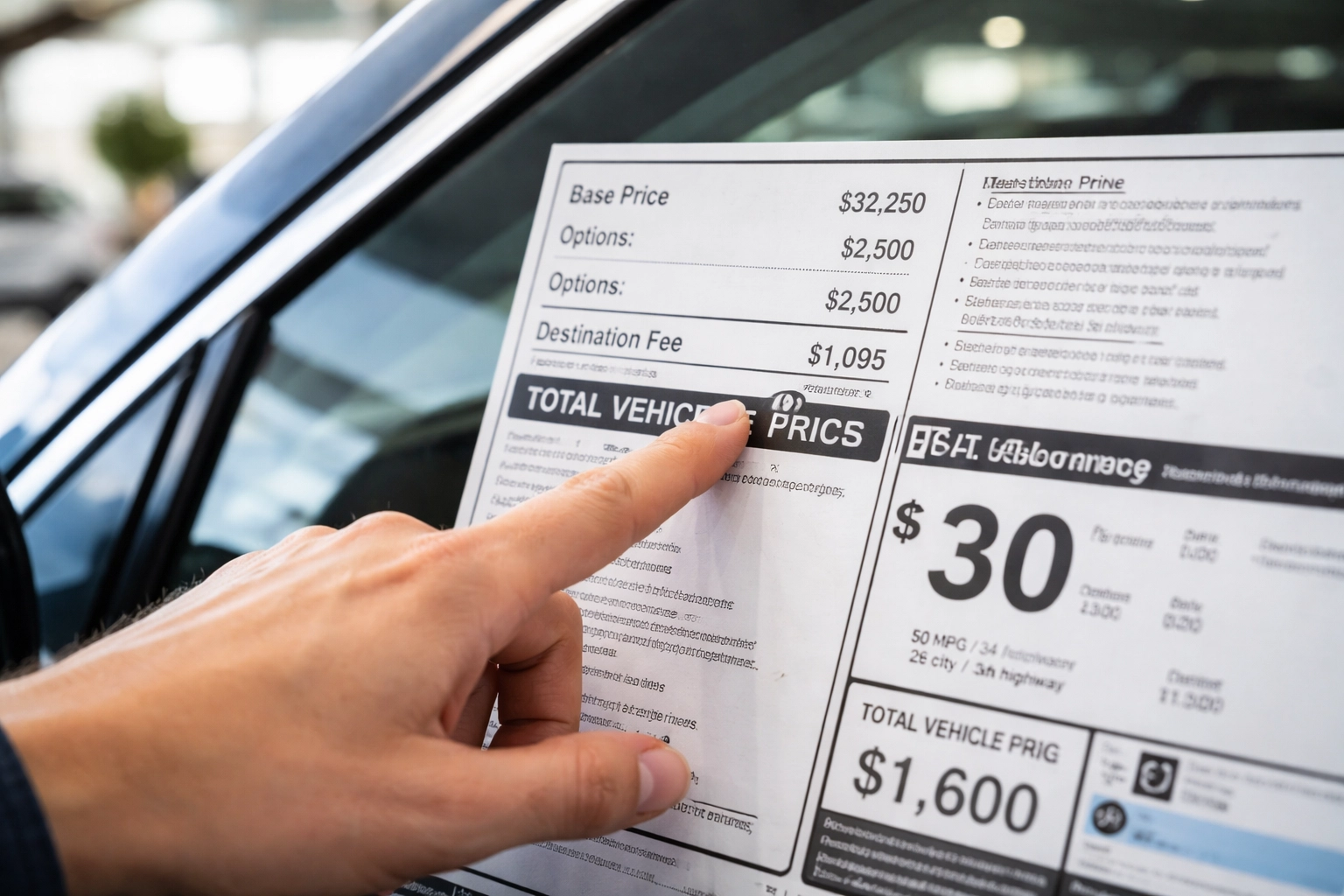
The fee is set by the manufacturer on a model-year basis. Bigger, heavier vehicles generally cost more to ship, which is why that F-150 might have a higher destination charge than a compact car.
Why Can't I Negotiate the Destination Fee?
Here's the part that frustrates some buyers: destination fees are non-negotiable. Unlike the vehicle's price, which you can often haggle over, the destination charge is set in stone by the manufacturer.
Why? Because it's a pass-through cost. The manufacturer is simply charging you what it costs them to get the vehicle to the dealership. The dealer doesn't make money on the destination fee: it just covers the actual shipping expense.
Now, that doesn't mean you're stuck paying full price for everything. At Long-Lewis, we always give our best price up front with no hidden fees.
Where to Find It on Your Window Sticker
The Monroney label is packed with information, and it can be a little overwhelming if you don't know where to look. Here's a quick guide:
- Base MSRP: This is the starting price of the vehicle with standard equipment
- Optional equipment: Any add-ons or packages that came with this specific vehicle
- Destination charge: Usually listed as a separate line item, often near the bottom
- Total MSRP: The final price including everything
The law requires the destination charge to be itemized separately, so it should be easy to spot. Just look for "Destination and Delivery" or "Destination Charge" on the sticker.
One thing to watch out for: when you see prices advertised online or in commercials, they sometimes hide the destination fee in the fine print. The big number they show might not include it. So always check the full breakdown before you assume you know the final price.
A Note on Imported Vehicles
You might be wondering: what about cars that are made overseas? Do they have even higher destination fees because they're shipped across the ocean?
Actually, it's a little more complicated than that. For imported vehicles, the cost of ocean shipping is typically built into the vehicle's base price rather than added to the destination charge. The destination fee you see on the sticker only covers the domestic portion: getting the car from the port (or domestic assembly plant) to the dealership.
So a Lincoln built in China and a Ford built in Michigan might have similar destination fees, even though one traveled much farther to get here.
Tips for Smart Car Shopping
Now that you understand what the destination fee is and where it comes from, here are a few tips to keep in mind:
- Always check the window sticker: Don't just rely on advertised prices. Look at the full Monroney label to see exactly what you're paying for.
- Compare apples to apples: When comparing vehicles from different manufacturers, factor in the destination fees. A car with a lower MSRP might actually cost more once shipping is added.
- Focus on the total deal: Since you can't negotiate the destination fee, focus on the bottom line.
- Ask questions: If something on the window sticker doesn't make sense, just ask. We're always happy to walk you through it.
The Bottom Line
The destination fee might seem like just another charge tacked onto your new car purchase, but it's actually one of the most straightforward costs you'll encounter. It simply covers the expense of getting your vehicle from where it was built to where you're buying it.
Thanks to Senator Monroney's efforts back in 1958, this fee has to be clearly displayed on every new car's window sticker. No hidden surprises, no shady math: just honest, upfront pricing.
Next time you're shopping for a new ride around Muscle Shoals, take a closer look at that window sticker. Now you'll know exactly what you're looking at when you see that destination charge. And if you have any questions, just contact me... Frosty The Car Man. I'm always here to help you understand exactly what you're paying for.


Comments
Post a Comment